


 The situation of children and young people in the Lebanese Crisis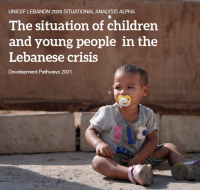
This report on the progress and inequities in the realisation of rights of children and young people in Lebanon presents a gender-sensitive and equity-focused evidence base on the predicament of younger populations in the context of multiple, compounding crises. It includes recommendations and priority actions for UNICEF in the current national context to inform policy dialogue, partnerships and interventions and to ultimately improve the lives of all children and young people in Lebanon.
The report was authored by Anasuya Sengupta (Development Pathways), Samah Halwany and Alexandra Irani (external consultants), with input from Madeleine Cretney (Development Pathways), Patrick Llewellin and Rima Al-Mokdad (external consultants), under the overall direction of UNICEF representatives Jamil El Khoury and Zarak Jan (Lebanon Country Office).
After an ambitious attempt to rebuild itself after the civil war (1975–90), since 2020 Lebanon is again at a dangerous crossroads, faced with compounding crises: political, financial and economic collapse; suspension of essential services, widespread unemployment and poverty; rising geo-political instability on its borders; and the COVID-19 pandemic.
Our analysis shows that Lebanon’s unprecedented crises are having a profound and devastating impact on children and families, who are increasingly in greater need of crucial support and ever more vulnerable to risks. UNICEF, at this juncture, needs to go beyond engaging with just donor-aided strategies, and identify entry points for engaging in longer-term reform processes in the country.