


Our vision
Inclusive Social Security Policy Forum (ISSPF) is a network and space for civil society organisations and individuals across the Middle East and North Africa (MENA) region challenging the dominant narratives and making the case for inclusive social security.
Shifting the Paradigm in the MENA region: from poor relief to inclusive social security
Across the MENA region, social insurance schemes tend to provide support solely to those in the formal economy, while the rest of the population is only offered poor quality programmes for “the poor”. The dominant social security paradigm across the region is a bifurcated model that excludes a large proportion of the population living on middle – but still low and insecure – incomes from social security, the so-called “missing middle”. The alienation of this key group from social security – and other public services – has become a major challenge across middle-income countries in the region, potentially undermining trust in the state, and is increasingly a key source of public unrest. There is a dire need to shift the narrative on delivering social protection in the region, to move away from the prevailing old-fashioned poor relief model and toward a modern, inclusive social security model.
What we do and how we work

ISSPF aims to de-mystify complex concepts in social protection and social security by improving understanding of the qualitative differences between different types of social protection programmes and their implications for achieving broader national economic and social development goals.Through the network, ISSPF provides access to research on inclusive social security, practical tools to support organisations as they engage in national debates, opportunities to participate in trainings and events on inclusive social protection, and a blog and news space to follow and weigh in on pressing issues.
Strategic Partnerships

 .
. 
Made possible with funding from the Ford Foundation, ISSPF is implemented by Development Pathways in partnership with Arab Renaissance for Democracy and Development (ARDD) in Jordan, the Centre for Social Sciences Research and Action (formerly Lebanon Support) in Lebanon and Observatoire Tunisien de l’Economie in Tunisia.
The Centre for Social Sciences Research & Action (formerly Lebanon Support) is a research centre based in Beirut. The NGO aims to foster social change through innovative uses of social science, digital technologies, publication and the exchange of knowledge. Founded in 2008 in Amman, Jordan.
Arab Renaissance for Democracy and Development (ARDD) is a civil society organisation which aims to address the challenges faced by the Arab world through encouraging dialogue, research, education, training, youth empowerment, gender justice, social and economic development, in addition to the provision of relief, social protection services and direct legal assistance.
The Observatoire Tunisien de l’Economie is the result of a 2012 initiative undertaken by researchers, analysts and activists concerned about Tunisian public policies. It seeks to provide guidance to citizens with regard to economic policies and their impact on development through independent, objective, documented and critical information.
Resources
The Right to Social Protection for Persons with Disabilities in the Middle East and North Africa
The role of World Bank and IMF in shaping social security policy in the MENA region: in brief
International Financial Institutions Breaking Down Social Contracts in the MENA
Shifting the paradigm: In-depth study of the social security systems in Lebanon
Shifting the paradigm in Jordan
Shifting the paradigm: building an inclusive, lifecycle social security system in Tunisia
Can Ration Cards Save Lebanon’s Poor Without Universal Social Security?
Social Security for Inclusive Growth Globally and in the MENA region
Beyond ‘ink on paper’: The right to social protection of persons with disabilities in Jordan
Strengthening the social contract in Jordan: the role of universal social security
The myth of a resilient Lebanon: Isn’t it time to end the global paradigm of gender inequality?
Infographic: Social security and gender equality
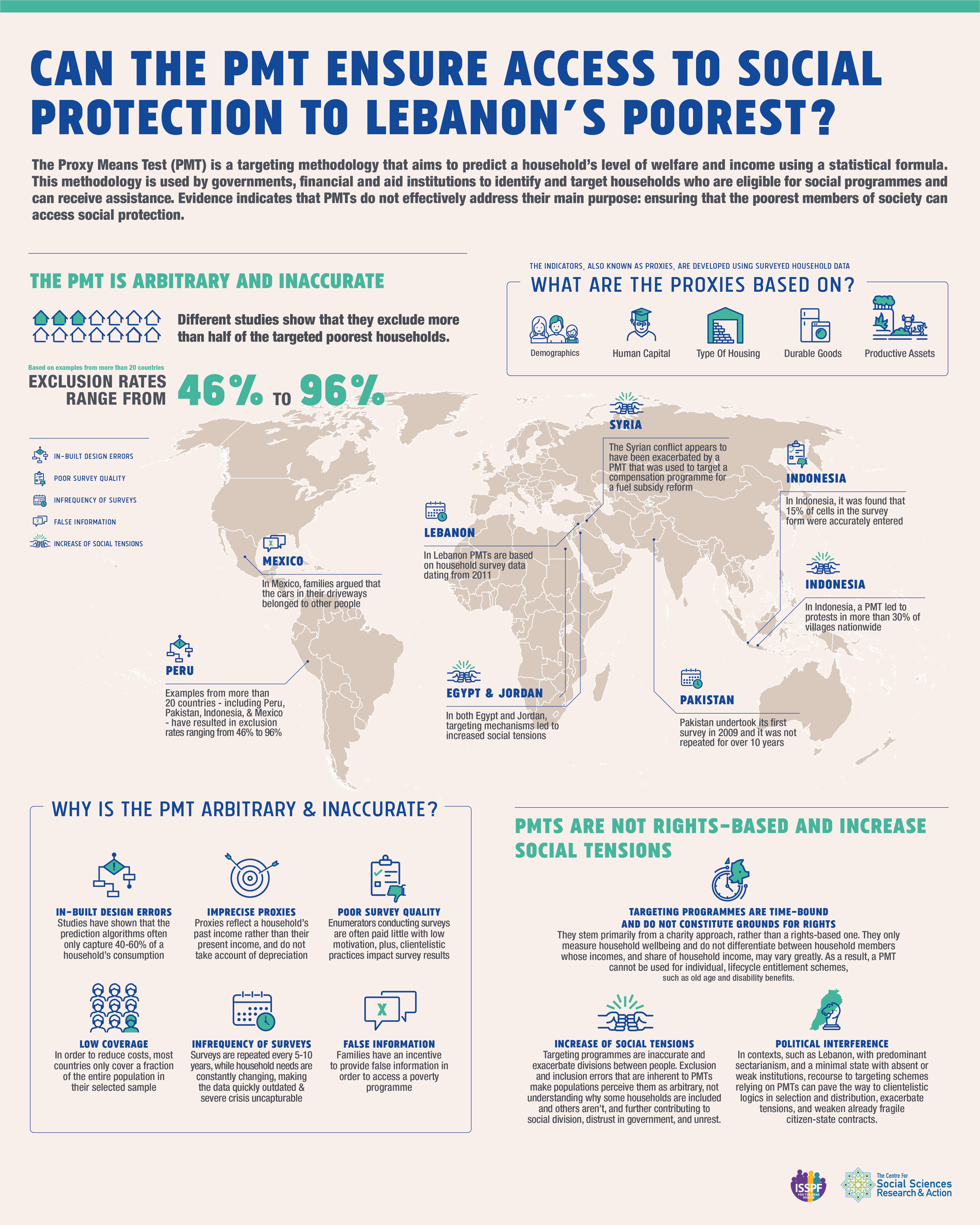
Infographic: Can the PMT ensure access to social protection for Lebanon’s poorest?
Resources from Partners
Coping with COVID-19 in Jordan: A gendered human security approach (العربية)
Possibilities and Challenges: Social Protection and COVID-19 Crisis in Jordan
Children with Disabilities Need Stronger Protection
Localisation in light of the lessons learned from COVID-19
ARDD: Series of Research and Training Initiatives by ARDD in Collaboration with University of Bath
Tax and Inequality in North Africa – (Version Française)
ARDD policy brief for enabling social and political participation of Palestinian refugee youth (العربية)
Documentation for Syrian Refugees in Jordan: Good Practices and Challenges (العربية)
Localising Gender Agendas Position Paper for International Women’s Day (العربية)
How CSOs Empowered Vulnerable Women During Covid-19 Pandemic: the Indebtedness of Women in Jordan (العربية)
Women’s Financial Vulnerability: Challenges Women Face with Debt and Loans (العربية)
Women’s Informal Employment in Jordan: Challenges Facing Home-Based Businesses During COVID-19 (العربية)
Debt and Imprisonment in Jordan Legal Analysis (العربية)
Children’s Access to Justice During COVID-19: Challenges Facing Children and Conflict with the Law in Jordan (العربية)
Unmet Legal and Protection Needs of Palestinian Refugee Youth (العربية)